
 Lietuvių
 English
Greenhouses were almost exclusively made of glass in the past. Over the last few decades, the variety of greenhouse coverings has increased dramatically. Technological advances have opened up the possibility of new products such as tempered glass, multi-wall polycarbonate, or polyethylene film. Which covering to choose?
The most popular coverings for modern greenhouses
Greenhouses, orangeries, and garden pavilions have only been made of glass for decades. There was simply no other transparent, light-transmitting, heat-retaining, protecting against the wind and long-lasting material on the market.
In the second half of the 20th century, a new material was introduced for greenhouses: polyethylene film.
In the 21st century, a new material, multi-wall polycarbonate has become rapidly popular in the greenhouse covering market, which has excellent thermal insulation properties. It is a transparent, lightweight, robust material. Manufacturers have made polycarbonate available in a wide range of thicknesses, colours, and sheet sizes, as well as quality and price.
All three materials are popular in the global greenhouse market, but tempered glass or polycarbonate is the most durable.
Greenhouse covering: glass or polycarbonate?
There is no clear-cut answer as to which greenhouse cover is "better". Both materials are good and popular among customers. Both materials have different as well as similar properties. Each of us also has different requirements in terms of form, function, and aesthetics of the greenhouse. When choosing a cover material for a greenhouse, we suggest considering the different characteristics of these coverings.
Glass covering for a greenhouse
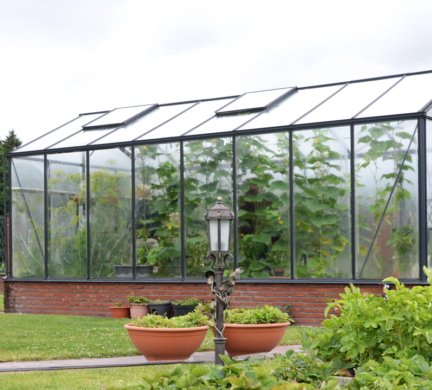
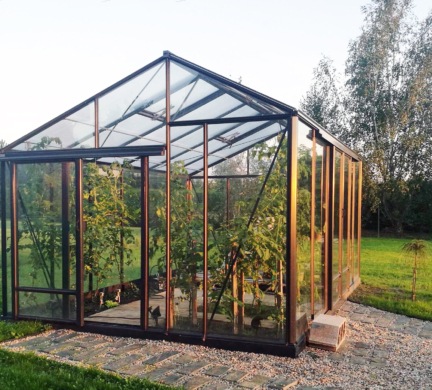
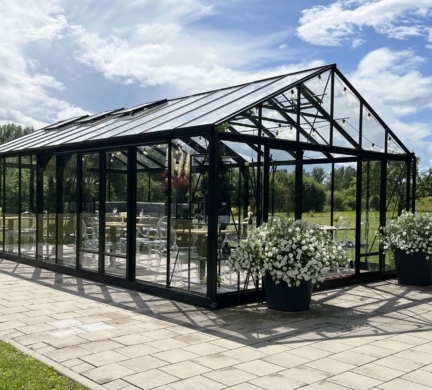
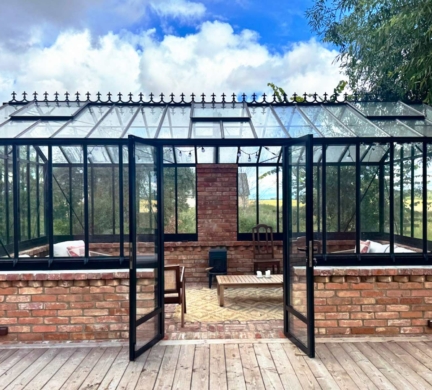
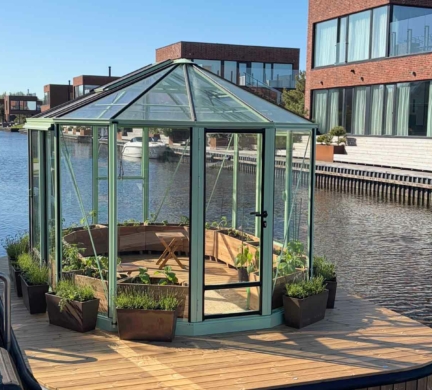
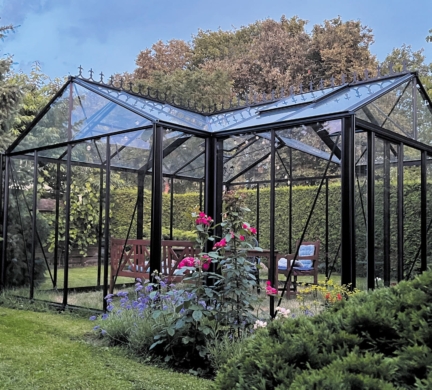
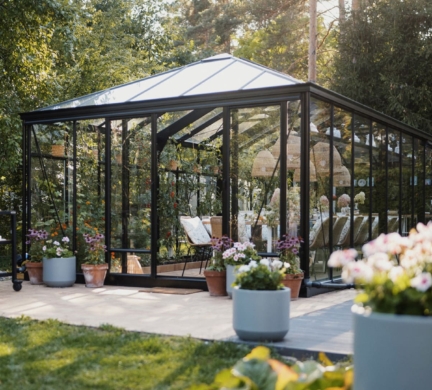
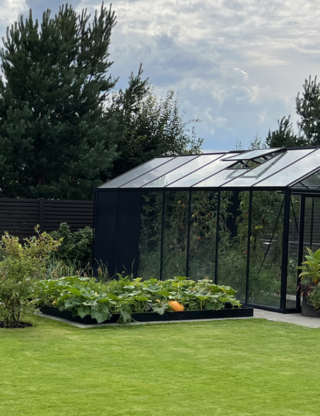
If you choose a glass covering, your greenhouse will look more aesthetically pleasing. In addition, glass is durable and transparent, passes sunlight, and retains heat very well. A transparent structure will add even more aesthetic appeal to your garden. If not damaged mechanically, the glass will remain almost unchanged for many years.
The glass is scratch-resistant, resistant to heat and cold, easy to clean and wash.
On the other hand, the glass itself is heavy, and the greenhouse as a whole, will weigh more as well. Bigger and more spacious models of the greenhouses will require a more complex/expensive roof structure. Therefore, the heavy structure is stable and more resistant to strong winds.
One of the main disadvantages of a glass greenhouse is its lesser thermoregulatory properties. It heats up quickly but cools down quickly as well.
The market is full of different glass supply and processing companies, so new glass sheets can be purchased quickly if needed.
The standard choice for "Gardenis" greenhouses is tempered clear glass with a thickness of 4 mm which is very durable and safe.
Polycarbonate greenhouse covering
Before choosing multi-wall channel polycarbonate as a greenhouse covering material, it is required to consider its properties carefully.
There is an especially wide range of polycarbonate sheets on the market. Polycarbonate comes in different thicknesses, densities, weights, colours, dimensions, protective layers, warranty periods, prices, etc. Before buying, consider the methods and materials used to insulate the sides and ends of the sheets, the way the sheets are fixed to the structure, the additional tools available, and the manufacturer's guarantee period.
The thicker the polycarbonate sheet, the better its thermal insulation properties, as it ensures a lower heat transfer coefficient.
Polycarbonate is particularly resistant to impact.
High-quality polycarbonate will last at least 10 years or even more without changing its essential characteristics. However, polycarbonate of low quality may change colour or even texture very quickly, after a year or two.
Since polycarbonate is a multi-walled material with an air gap, it is necessary to properly seal the open ends of the sheets before placing them in the frame of the greenhouse. This ensures that dust, moss, insects, water, micro-organisms, etc. do not accumulate inside, while at the same time air circulates in the channels and the excess moisture naturally present in the air is eliminated.
The direction in which the polycarbonate is placed in the greenhouse frame is especially important. If you apply the covering yourself, be sure to pay attention to the special film with warning signs on the sheets. This indicates which side of the sheet should face inwards and which side should face outwards. Do not mix!
For "Gardenis Greenhouses it is used only the long-lasting quality clear channel polycarbonate of 10 mm thickness.
During the process of installation, the sheets of polycarbonate are placed in the frame and remain undamaged (not punctured, not drilled). Both ends of the sheets are properly sealed. The sheets are clamped on the outside of the greenhouse using sun-resistant, strong EPDM strips.
Combination of glass and polycarbonate covering
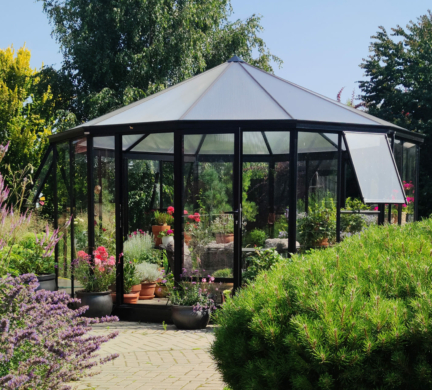
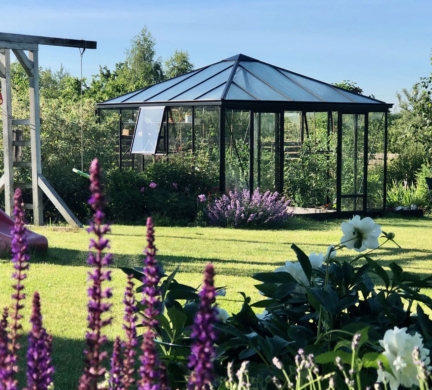
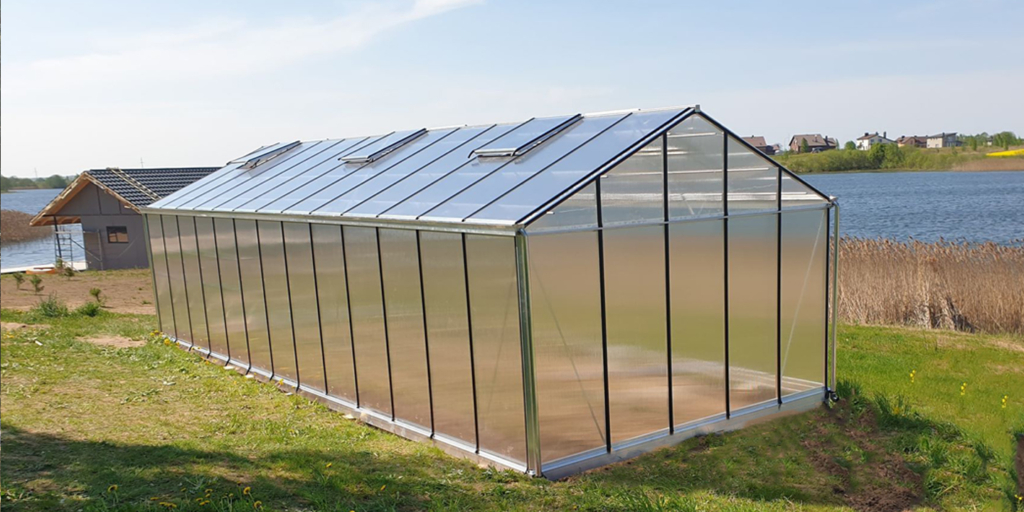
A combination of both materials is also available. A popular choice among customers is to use 10 mm polycarbonate for the roof and glass covering for the walls.
Replacement of the covering sheet
When choosing a greenhouse, pay attention to what techniques will be used to attach a polycarbonate sheet to the frame. Will it be firm? How complicated will it be to replace one or more sheets if necessary? How long will the material maintain its qualitative and aesthetic characteristics?
When necessary, replacing polycarbonate sheets of a Gardenis Greenhouse is easy. There is no need to disassemble the entire greenhouse structure or to purchase additional fasteners. It is done by simply removing the EPDM rubber strip (on the outside of the greenhouse) that holds the cover segment to be replaced, carefully sliding it out, and sliding in a new one. After that, just clamp the fastening strip firmly in place. You can order new glass or polycarbonate sheets from our company or local suppliers at any time (4 mm clear tempered glass or 10 mm polycarbonate).
Make your own decision
The final decision on which material to choose depends on your intended use, personal aesthetic tastes, the location where you plan to build it, and other environmental and functional conditions.
Check the technical parameters of the greenhouse covering offered by the specific vendor and the main characteristics of these materials. Take a look at our greenhouse photo galleries. Gather information, be aware of your personal needs, and make your own decisions.